 BikeTourFrance.net BikeTourFrance.net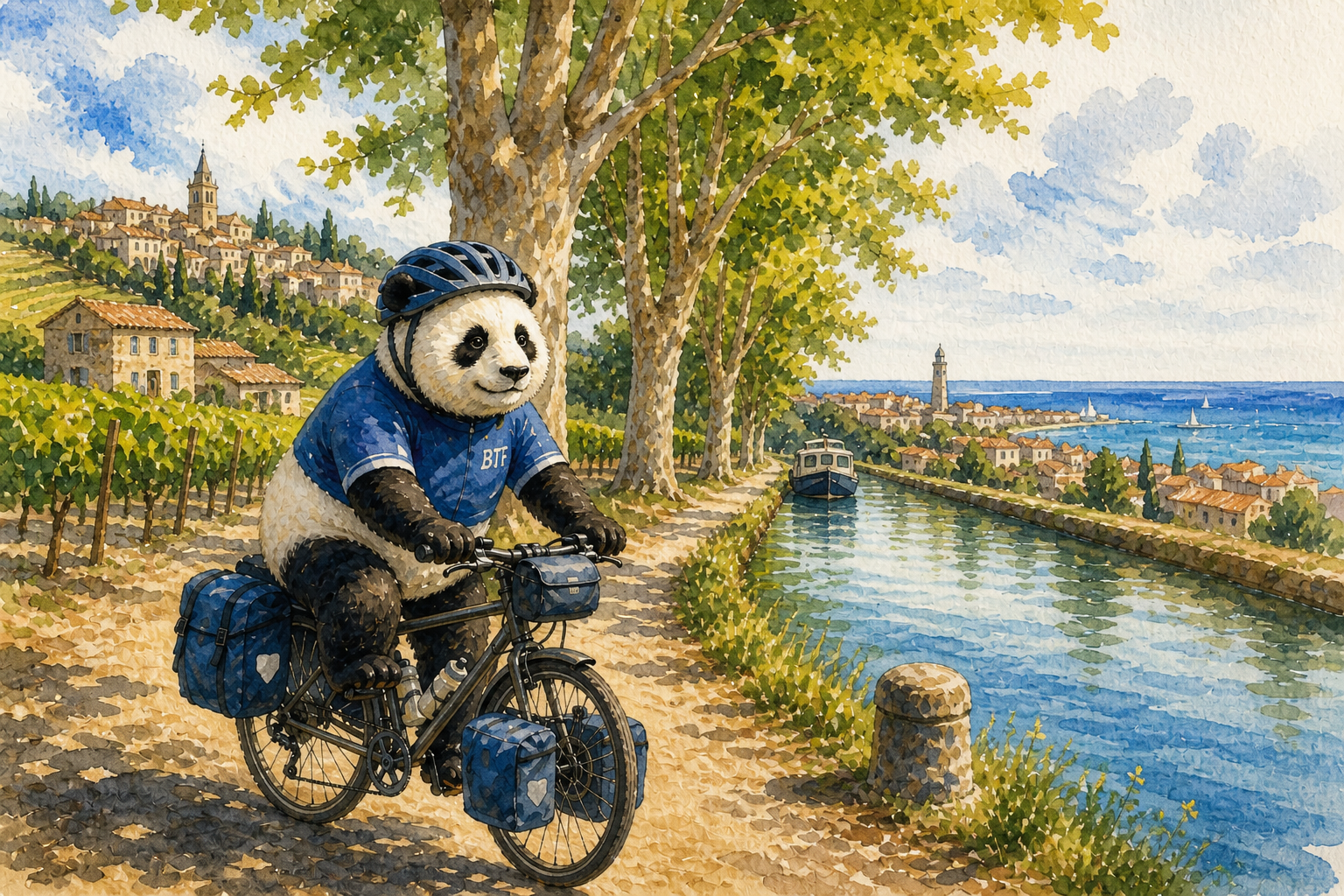
From Bordeaux to Sète—Atlantic to Mediterranean—through wine country, cassoulet country, and on to sea salt, oysters, and mussels.
Ride self-supported with a small group and a clear daily route. Enough support and camaraderie to make it work—and enough self-reliance to do yourself proud.
Dates
September 11–22, 2026
Route
Bordeaux → Sète
Distance
320+ miles
Ride Days
9 ride days + 1 rest day
Cost
No tour fee + est. lodging $125/$175 per night + ~$1,000 PP food/transport (train)
This is a small-group ride across France—roughly 320+ miles over 9 riding days—from the Atlantic to the Mediterranean.
I've planned the route, the overnight stops, and where to find food, water, and a bathroom along the way. I've also pulled together context—what we're seeing, where we are, and why it matters—so the ride isn't just miles, but an experience of the place.
The route itself follows two 17th-century canals built to connect the Atlantic to the Mediterranean for the transport of agricultural goods like wheat and wine. Because of that, it's remarkably flat—only about 2,000 feet of climbing over the entire distance. That's less than what I'll often ride on a challenging weekend at home.
This is a self-supported tour. Everyone carries their own gear. Before the trip, we'll spend time talking through how to pack light and what you actually need for something like this. There's no support vehicle and no one picking us up if we're tired. If you flat, you fix it. If you decide to take a train, you get yourself to the station and sort it out.
I speak French, and we'll be riding through rural areas where that matters. That's part of how I help make this work.
At its core, I'm leading the ride—setting the route, the structure, and the plan—but each rider is responsible for getting themselves through the day.
I love France, and I love riding my bike. Trips like this are some of my favorite ways to spend my time, and I enjoy sharing what I've learned with people who might not otherwise have access to an experience like this.
In my own life, I've found that money makes things comfortable by reducing friction. That makes sense when I'm traveling for work. But on a ride like this, I've found that being open, self-reliant, and a little more vulnerable creates experiences that don't happen on fully supported, perfectly managed tours.
Like the time I spent three hours riding next to Claude—83 years old—who insisted on showing me his stretch of the Loire, where he grew up and raised his family. We talked about life, about bikes, about everything. If I hadn't wandered off route looking for food and gotten a little lost, I never would have met him. It's one of my favorite memories from a trip like this.
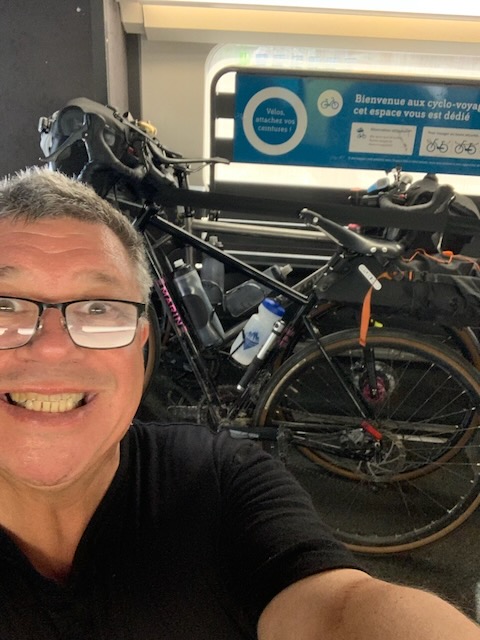
I'm John, the cyclist behind BikeTourFrance.net. I've planned and ridden multiple self-supported tours across France and learned firsthand how quickly the details compound—route choices, timing, food, lodging, and daily rhythm all interact.
I lead rides with Cascade Bicycle Club in Seattle and hold DELF B2 certification in French. I'm comfortable on the bike and in the environment this ride moves through.
At BikeTourFrance, we help cyclists create extraordinary bicycle tours in France. You'll get direction, coaching, encouragement, and daily route support—but you won't be pampered.
We're riding together, but each of us is responsible for getting ourselves—and our bike—through the day. You should be comfortable handling the basics and prepared for the small things that come up. If something bigger happens, we'll work together to figure it out—but the ride is yours.
I prefer a good route, a real bed, a warm shower, and a solid meal at the end of the day. That's the experience this is built around.
“We did the Atlantic France tour with BikeTourFrance in 2024. My main apprehension was navigating and wayfinding in a foreign country—not the distance itself. John's support and his deep understanding of the route, culture, and practical cycling in France gave me the confidence to take it on. Plus, his introduction to the EV (véloroute) system was such a cool discovery. Physically I felt great on the bike and with John's expertise and encouragement, it became the trip of a lifetime for us.”
— Christopher J
“I was so excited to do the viaRhona from Lyon to the Mediterranean with BikeTourFrance but I wasn’t sure about packing. John’s guidance on and off the bike helped me show up prepared and knowing that the lodging and logistics were 100% locked. Such a relief and so liberating to be a bike traveler and not just a tourist!”
— Andrea B
“I did the EV6 Loire section with BikeTourFrance in 2025. John led the tour. I appreciated his focus on safety and making sure we were aware of the route knowns and unknowns every day. I also felt like he’d charted a challenging course but made sure it was achievable every day. Such a remarkable experience to ride ride through all the chateaux and engage with French cyclists along the way. So not a typical tour!”
— Catherine D
Interested in joining? Check the calendar below to see available dates and get in touch to discuss if this ride is the right fit for you.
This is not for elite, performance-oriented cyclists chasing Tour de France climbs. If your idea of a great ride is Mont Ventoux and every major col—and doing it fast with someone else carrying your gear—this is not that.
I have plenty of friends who ride that way, and I respect it. I enjoy it too, in the right context. But that's not what this is built for.
This is for people who ride, who like being on the bike, and who expect this will be a challenge—but also understand what it means to ride 300+ miles in a foreign country carrying all their own gear with a like-minded group of cyclists.
Being experienced riding in a group is not critical, but it will help ease anxiety. Either way, we'll have a quick, practical safety talk every morning so we all stay mindful of what we're doing.
Pace matters. Some riders will want to ride with me because I'm leading this. That's fine. But you should understand how I ride.
I lead groups of slower cyclists for Cascade Bicycle Club because I am one of the slower cyclists. On the flats, unloaded, I ride about 12–14 mph. With gear, that's closer to 10–12 mph. On any incline, I lose about 1 mph per degree. At around 5%, riders will naturally separate and ride their own pace. We regroup at the top.
Most of the day, people ride their own ride. We start together, follow the same route, and reconnect along the way and at the end of the day.
This is not a supported tour. There is no mechanic riding with us and no support vehicle. You should know how to fix a flat and be comfortable carrying and using basic gear: a spare tube, tire levers, a pump, a patch kit, and a multi-tool.
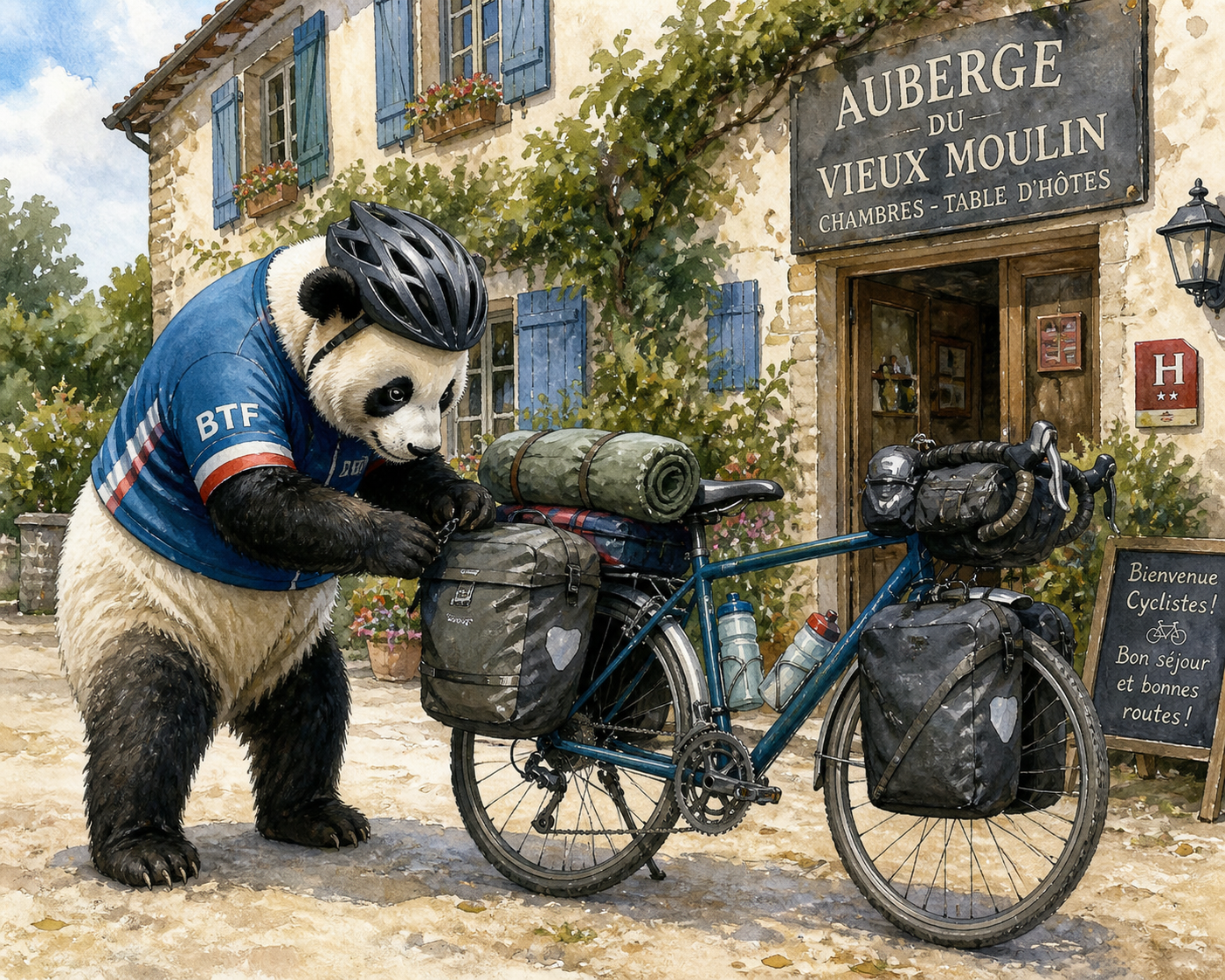
The goal is not to fill this with hardcore cyclists who rebuild bottom brackets for fun. The goal is to bring together people who ride, who like riding, and who are comfortable being on the bike day after day.
We should all expect to have some knowledge gaps. That's normal. When things come up, we will work through them together.
I speak French, and we'll be riding through rural areas where that matters. There will be moments where that becomes important, and I'm comfortable taking that on when it does.
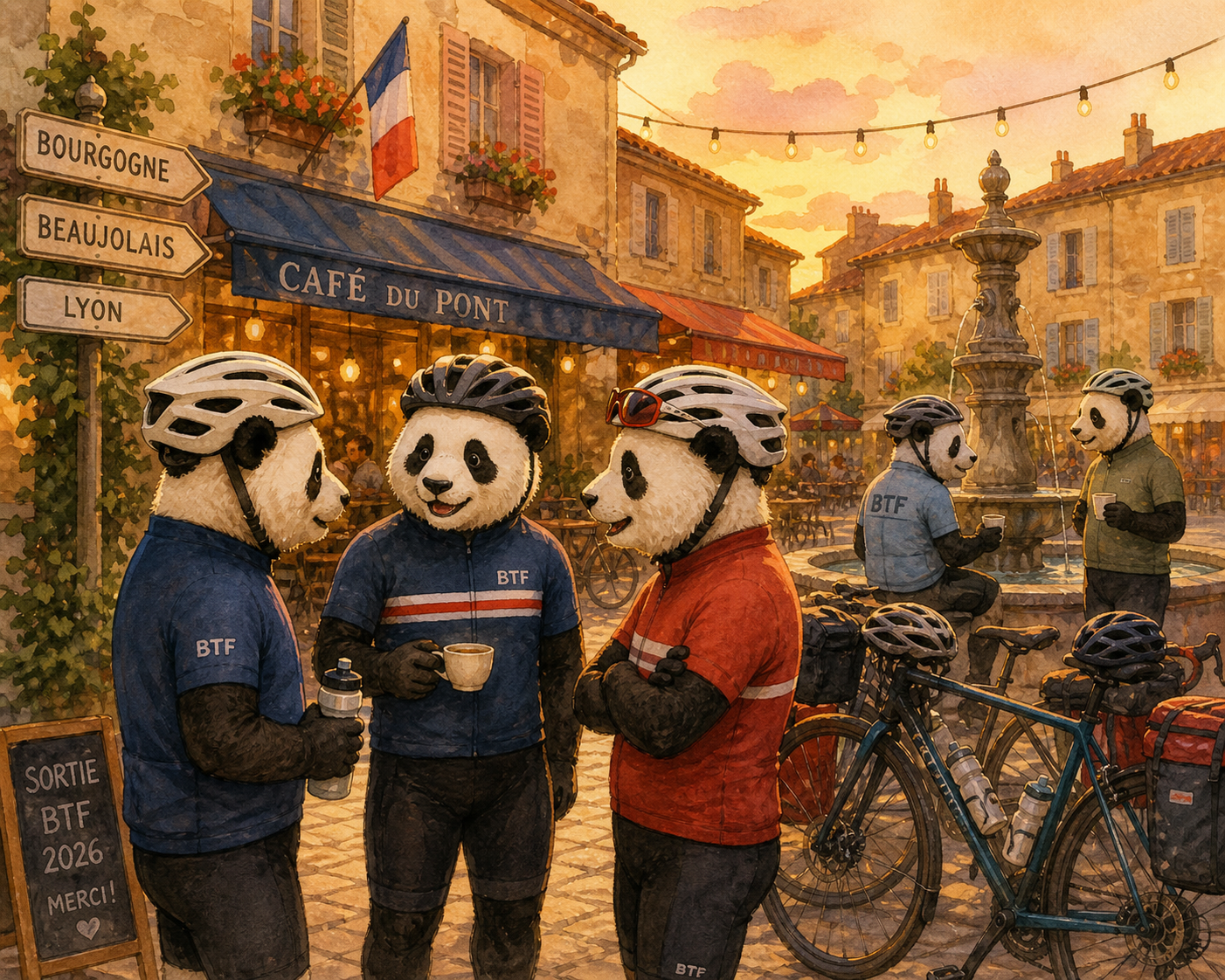
So, what happens every day on one of these deals?
You're probably up around 7:00 AM. You do your morning thing, get your gear packed, and head downstairs for breakfast. Breakfast is included everywhere we stay. It's a thing in France. Here's the rule: always take the breakfast.
It's usually delightful, and you'll appreciate having some food on board when we roll out—but there's another reason. Twenty-five years ago, on my first self-supported walking tour in Normandy, I showed up on foot at the only hotel in town with a room left. The woman asked if we would take breakfast. I said no. She closed her book and said, "Well, I guess we don't have a room for you then." So, I take the breakfast.
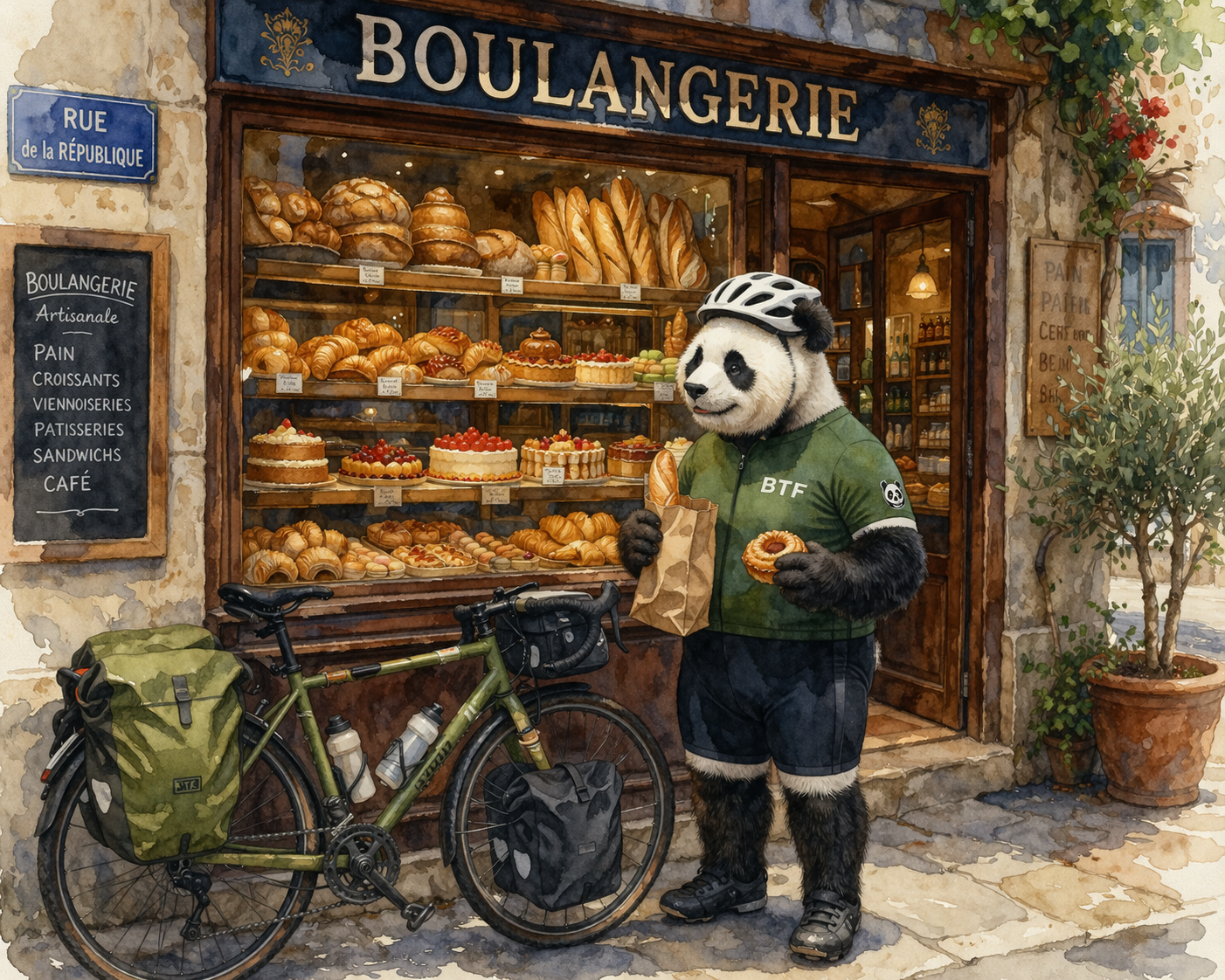
It's also not that easy to find breakfast out on the street. The French don't really grab food and walk around the way we do in the U.S., so your options are more limited (thank god for bakeries).
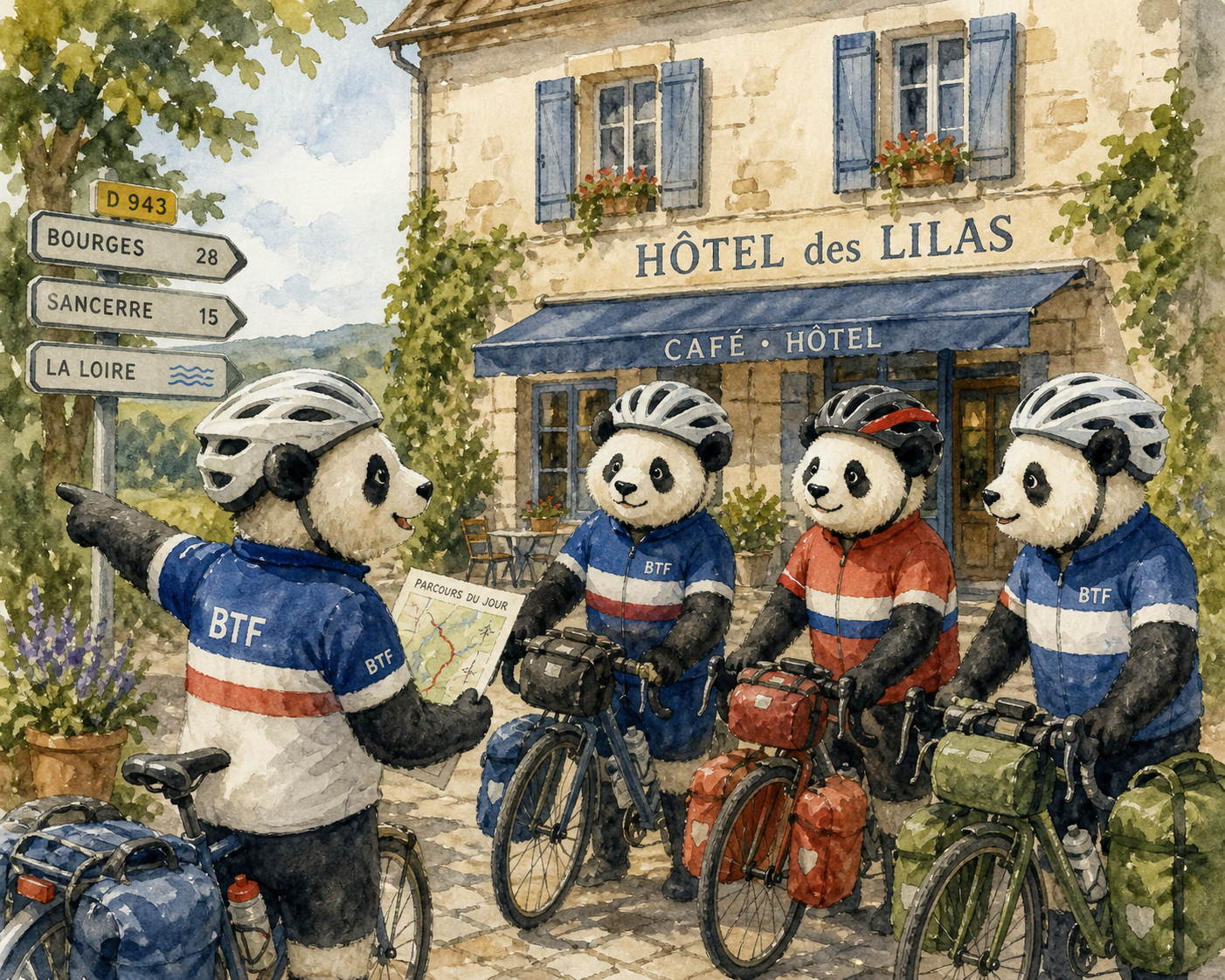
You should be mostly packed and effectively checked out by the time you come down for breakfast. You'll want to be done eating and coffee-ing by about 8:20 so you can go grab your kit, check out, get your bike from wherever it was stashed, load up, and bring your bright, smiling face to me at 8:45 AM sharp.
At 8:45 we have our daily ride brief. We'll talk about the route—sticky bits, places it's easy to get lost, where to pay attention. We'll also do a quick safety reminder—just good bike hygiene for riding in a group.
Then we roll.
We'll likely ride for a couple of hours. We'll look at the CDM2 WebApp I built, which shows water, bathroom, and bakery stops, and decide where we might grab sandwiches for lunch. Maybe we stop at a café, have a coffee on the terrace so we can keep an eye on the bikes, get caffeinated, top off the bidons, and make a plan. Fifteen minutes, max.
Then lunch. We roll into the town we picked—maybe 15 miles up the road—hit a bakery, grab sandwiches, something to drink, maybe a pastry. We eat in a park, a square, the centre ville, or out front of the town church. Little sandwich. Little Perrier. Little pastry. It's a good plan.
Then we're off again.
We might stop at one of the bigger locks along the canal—some of them are substantial, with real marina activity. Then we push on into the destination town.
We might circle up at a café for a post-ride beer. Then we check into our lodging, get the bikes sorted, clean up, take a little rest, and meet back in the lobby at 6:45 PM.
Dinner is at 7:00 PM. I'll have made a reservation. In the morning briefing, I'll have asked who's in so I can give the restaurant a headcount.
We sit down, eat well, maybe have a glass of wine, and call it a day.
Back to the hotel, and you're usually tucked in by 9:00.
Eat. Sleep. Roll. Repeat.
Before we go, we'll meet twice on Google Meet—once about six weeks out, and again about four weeks before we roll.
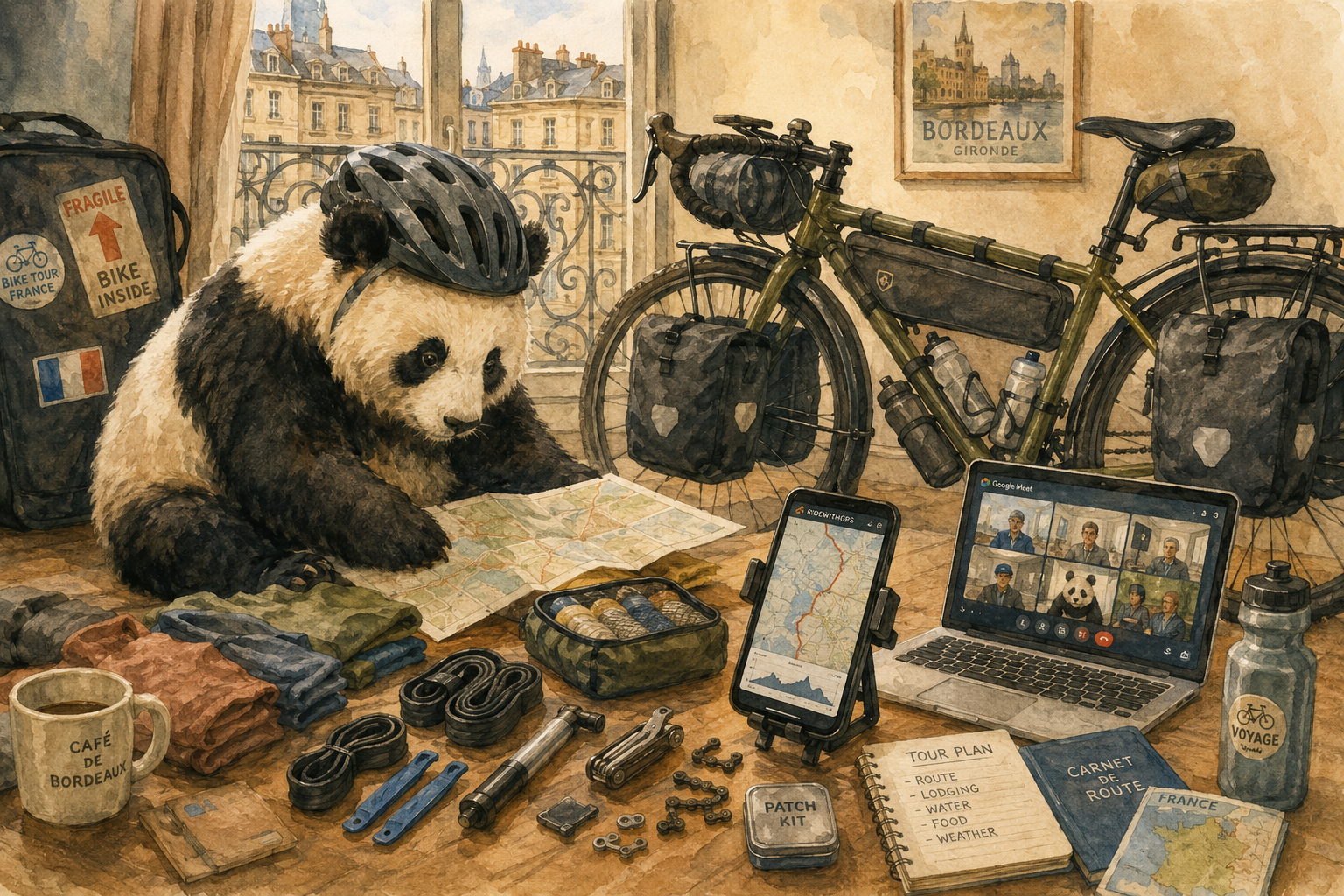
The first meeting is about getting set up. We'll talk about bikes, hauling, packing, and what to carry on the bike and how. We'll go through clothing, kit, and basic emergency supplies—tubes, tire levers, a pump, a patch kit, quick links for your chain, and a multi-tool. The goal is to give you enough time to get what you need before you leave home.
We'll also talk through logistics—where to stay in Bordeaux, how we're handling bike travel cases, and what to expect at the start and end of the trip. I will strongly suggest that you stay where I stay the first and last nights in Bordeaux. I'll arrange for the hotel to hold our bike cases while we ride across France, and we'll return there at the end to pack up for the trip home. We'll cover train logistics as well.
The second meeting is about the route. You'll already have the RideWithGPS files, but we'll walk through them together so you know what to expect.
If you're not familiar with RideWithGPS, I may set up a short overview session if there's enough interest. RWGPS also has good how-to videos online. I'll suggest you get a mount for your phone and do a few rides using RWGPS before the trip—ideally on routes you already know—so you can see how it works in practice. You don't need to be an expert, but knowing the basics will make the ride a lot less stressful.
We'll also cover bike setup.
If you want to ride an e-bike, you'll need to rent one. Airlines won't let you check an e-bike.
For tires, you'll want something in the 35mm range or wider. I ride 35s and they work well. Wider tires can help in sandy sections and tend to be more comfortable, but they weigh more. Like everything else on this trip, it's a tradeoff—you choose what you want to carry.
Leave your name and email and I'll send occasional updates as planning for the September 2026 Canal des Deux Mers ride develops.
There is no tour fee. If you feel like tipping at the end, that's appreciated—but there's no obligation.
You are responsible for your own airfare, lodging, meals, and anything else you need along the way.
For planning purposes, here's a rough range:
Lodging: about $150–$200 per night (typically per room; lower per person if shared, higher if solo) Food: about $50–$75 per day per person Train (Sète → Bordeaux): typically €40–€120 one-way on the TGV for a Saturday in mid-September
All in, most people will likely spend somewhere in the $2,000–$3,000 range for the trip, not including airfare.
I will choose where I stay each night and strongly suggest you stay nearby. When I find good options, I'll share them. You're free to stay elsewhere, but understand that we meet each morning at my hotel at 8:45 AM to start the day.
This is not an open signup. It's important that this is a good choice for everyone participating. We'll have a short call and mutually decide if this is a good fit for you.
Night 0
UNESCO-listed Bordeaux grew rich from Atlantic trade and wine shipping; today it blends grand eighteenth-century architecture, riverfront energy, and global renown as France's wine capital.
Night 1
Founded in 977 on the Garonne, La Réole is a Town of Art and History, rich in medieval fabric, priory heritage, and river trade memory.
Night 2
Agen is France's prune capital, a river city whose identity mixes produce, markets, and administrative importance with an easygoing southwest urban character for riders today.
Night 3
Moissac is a major pilgrimage stop and art-historical prize, celebrated for its UNESCO-listed abbey cloister and for Chasselas grapes grown nearby for riders still today.
Nights 4–5
The Pink City is Europe's aerospace capital, where brick architecture, student energy, rugby, Airbus, and space research give Toulouse an unusually modern historical identity today.
Night 6
Castelnaudary is the world capital of cassoulet, a canal town whose culinary fame easily surpasses its size and anchors Lauragais identity for riders still today.
Night 7
Carcassonne is one of Europe's great fortified cities, a UNESCO-listed walled ensemble whose towers, ramparts, and restoration history make it instantly memorable for riders today.
Night 8
Lézignan-Corbières is deeply identified with wine, serving as an important commercial center for the Corbières vineyards and broader Aude countryside for riders and visitors today.
Night 9
Capestang stands out for its massive collegiate church and canal-side setting, blending wine-village character with imposing medieval ecclesiastical ambition for riders and visitors still today.
Night 10
Sète is a canal-laced Mediterranean port famed for maritime trade, seafood, and the Saint-Louis festival, where spectacular water jousting remains central for riders still today.